
To navigate Los Angeles ADU permit costs successfully, start by understanding local regulations and obtain accurate project valuations to avoid delays. Estimate fees based on ADU type; garage conversions and detached units have varying costs. Explore cost reductions through efficient materials and pre-approved plans, which can also speed up approvals. Collaborate with professionals for compliance and use services like GreatBuildz for contractor insights. Stay aware of additional fees, and explore different cities for comparative costs. Consider these strategies further to guarantee a smooth process.
Understanding Los Angeles ADU Permit Requirements
When you’re considering building an Accessory Dwelling Unit (ADU) in Los Angeles, understanding the permit requirements is vital to a smooth project.
The Los Angeles Department has specific guidelines for ADU permit costs, which typically range from $1,400 to $8,000. These costs depend on factors such as the project’s scope and added square footage.
To guarantee accuracy, you need a realistic project valuation during your permit application. The building department won’t accept low estimates, so be prepared to calculate construction costs carefully.
Additionally, you’ll encounter permit fees, including plan check fees and development taxes. These are significant for effective budgeting. It’s also important to consider that property taxes may increase due to the added value of the ADU.
Estimating Permit Costs for Garage Conversions
Estimating permit costs for garage conversions in Los Angeles requires thoughtful consideration, as these projects can be a cost-effective alternative to new construction.
For an ADU garage conversion, anticipate spending around $1,496.21 in permit costs, based on a $75,000 project valuation. This figure includes fees for plan checks, permits, and development taxes.
Homeowners must provide an accurate project valuation during the permit application to avoid underestimation. While the overall permit fees are generally lower than those for new constructions, you should prepare for additional costs related to inspections and compliance checks.
These can vary depending on the specifics of your project, so it’s essential to factor them into your budget. Proper planning guarantees a smoother approval process and successful conversion. Additionally, consulting with ADU experts can provide valuable insights into the permitting process and associated costs.
Calculating Fees for Detached ADU Projects
Calculating fees for detached ADU projects in Los Angeles involves a clear understanding of the various components that contribute to the overall cost.
Permit fees for a typical 1,200 square foot detached ADU can reach approximately $7,479.26, based on a project valuation of $150,000.
You must also consider potential additional charges, like the School District Fee and Energy Surcharge, which vary by specific project and location.
If your detached ADU exceeds 750 square feet, impact fees will apply, calculated in relation to the primary residence size.
Accurate project valuations are vital when submitting your application, as the city won’t accept low estimates, impacting your permit costs.
Ensuring compliance with building codes is essential, as total permit fees cover city departments involved in the process.
Exploring Cost Reduction Opportunities
To cut ADU permit costs in Los Angeles, start by selecting efficient materials that meet building standards without unnecessary expense.
Compare multiple contractor bids carefully to guarantee you’re getting the best value for your money, and consider simplified design choices that comply with codes while minimizing complexity.
Efficient Material Selection
When aiming to reduce costs in your ADU construction project, selecting efficient materials plays an essential role. Start by choosing cost-friendly materials like laminate flooring, basic vinyl windows, and stucco, which help cut down overall construction expenses.
Consider pre-fabricated cabinets and simple finishes to keep costs manageable while maintaining a functional and appealing interior. Focus on energy-efficient systems, such as tankless water heaters, for long-term savings despite initial costs.
Streamline your design by opting for rectangular shapes instead of curved walls, and limit plumbing walls to reduce installation expenses. By making thoughtful decisions on materials and layout, you’ll effectively optimize your budget, ensuring the construction process remains efficient without compromising on quality or functionality.
Contractor Bid Comparison
Securing multiple bids from contractors is a strategic way to uncover cost-saving opportunities for your ADU project. By comparing contractor fees, you can identify the most cost-effective options that align with your budget.
Make certain the bids are detailed, including labor, materials, building permit fees, and any potential additional costs. This transparency is essential for making informed decisions.
Contractors familiar with Los Angeles’ local regulations can help you avoid unexpected expenses related to plan checks and compliance. When reviewing comparative bids, prioritize those offering cost-efficient construction methods, impacting overall project costs positively.
Simplified Design Choices
While exploring ADU design choices, opting for simplicity can greatly reduce costs and streamline your project.
Simplified design choices can be both cost-effective and efficient. By focusing on straightforward layouts, you can markedly cut construction costs and stay within budget.
Here’s how you can make your ADU budget-friendly:
- Rectangular Designs: Choose rectangular shapes over unique ones to simplify construction and reduce expenses.
- Cost-Friendly Materials: Utilize laminate flooring, basic vinyl windows, and stucco to keep overall expenses manageable.
- Standard Layouts: Opt for standard kitchen and bathroom layouts to minimize plumbing costs and maintain a budget-friendly approach.
- Pre-Approved Plans: Use pre-approved plans to expedite the permitting process and avoid the costs associated with custom designs.
Evaluating the Impact of Project Size on Fees
When you’re planning an ADU project in Los Angeles, understanding how project size affects permit fees is essential.
Garage conversions might cost you around $1,496, but if you’re thinking of a larger detached ADU, expect expenses to climb beyond $7,000.
Smaller ADUs under 750 square feet often benefit from impact fee exemptions, making them a more budget-friendly option, while the square footage of larger units greatly influences your overall costs.
Garage Conversion Costs
Converting your garage into an accessory dwelling unit (ADU) in Los Angeles can be a cost-effective way to maximize your property’s potential, but understanding the permit costs is essential.
Garage conversion costs primarily hinge on project valuation, with ADU permits in Los Angeles ranging from $1,400 to $8,000. Here’s what to evaluate:
- Project Valuation: Your project must reflect a realistic valuation, typically around $75,000, to avoid rejection by the city.
- Total Project Budget: Include additional fees like plan checks, inspections, and development taxes, which can affect your total project budget.
- Square Footage: Garage conversions average 350-400 square feet, often suiting studio apartments.
- Permit Costs: Expect to pay approximately $1,496.21 for permits, based on standard project estimates.
Understanding these factors will help you manage costs effectively.
Detached ADU Expenses
Understanding the expenses associated with building a detached accessory dwelling unit (ADU) in Los Angeles is essential, especially as project size greatly impacts the fees you’ll encounter.
Permit costs for a 1,200 square foot detached ADU are about $7,479.26, based on a project valuation of $150,000. However, if your ADU exceeds 750 square feet, you might face additional impact fees.
School fees apply if your detached ADU is over 500 square feet, with current rates at $4.79 per square foot, which can greatly raise project expenses.
Permit costs can fluctuate depending on your specific project scope, including plan checks and inspections.
To accurately budget, consult the LA City Fee Schedule to understand all potential fees for your detached ADU project.
Square Footage Impact
Project size greatly impacts the costs associated with building an accessory dwelling unit (ADU) in Los Angeles. Understanding how square footage affects ADU permit costs is essential. Here’s what you need to know:
- Fee Exemptions: ADUs under 750 square feet are generally exempt from impact fees, helping you save considerably on costs.
- Proportional Fees: Larger units, like a 1,200 square foot ADU, can incur permit costs around $7,479.26 due to higher construction costs and project valuation.
- Garage Conversions: These typically cost about $1,496.21 for permits, reflecting their smaller size and lower construction costs.
- Impact Fee Calculation: For ADUs over 750 square feet, fees may be proportional to your main home’s size, influencing building permit fees and other expenses.
Understanding these factors guarantees smarter planning and budgeting.
Navigating the Permit Application Process
While starting on the journey of obtaining a permit for an ADU in Los Angeles, you’ll find that a clear understanding of the application process is essential for success.
Steering through this involves considering permit fees and ADU costs tied to your building project. The application process requires collaboration with city departments, ensuring your construction plans align with realistic project valuations. Low estimates won’t be accepted, so prepare to reflect accurate project scopes.
For instance, a detached ADU of 1,200 square feet may see permit costs around $7,479.26, including various department fees.
Expect the process to take from weeks to months, depending on the completeness of your submitted plans and the local building department’s workload. A thorough approach sets the foundation for smooth progress.
Identifying Additional Fees and Surcharges
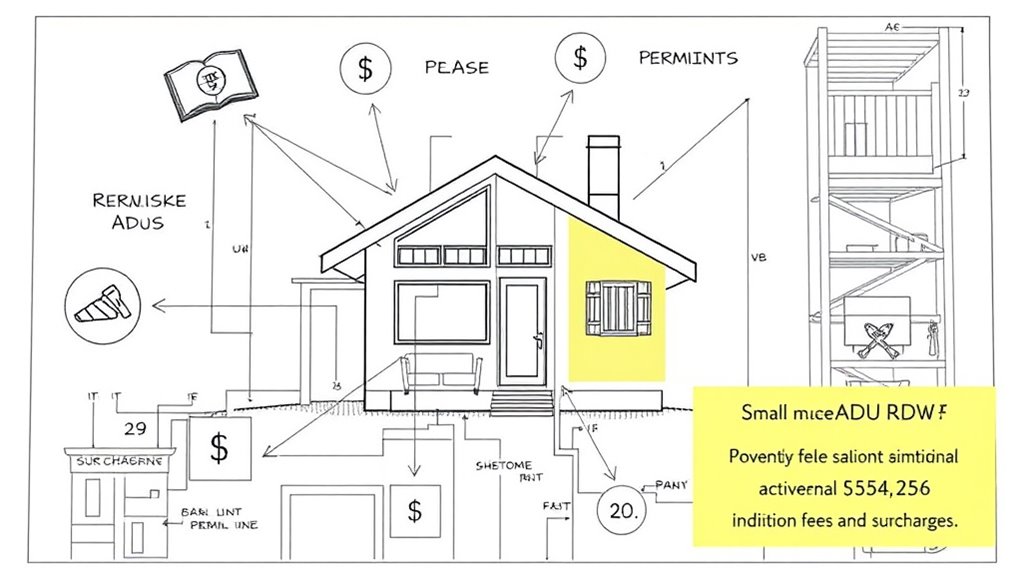
When planning your ADU project in Los Angeles, it’s crucial to identify the additional fees and surcharges that could impact your budget.
These costs can add up quickly and affect your overall construction costs. Here’s a breakdown of potential fees you might encounter:
- Permit Fees: Costs vary, with garage conversion permits around $1,496.21 and larger ADUs potentially reaching $7,479.26.
- Impact Fees: While ADUs under 750 square feet are generally exempt, larger units may incur reduced fees based on their size.
- Utility Connection Fees: New connections for water, sewer, or electricity can add significant additional costs.
- School District Fees and Energy Surcharges: Particularly for bigger ADUs, these can substantially increase overall expenses.
Identifying these costs early helps you budget better.
Leveraging Pre-Approved Plans for Cost Savings
Leveraging pre-approved plans for your ADU project in Los Angeles can greatly cut down on both time and costs by streamlining regulatory compliance.
While these plans can save you thousands in architectural fees and reduce permit processing to mere weeks, it’s essential to recognize that they may limit your customization options.
Understanding the trade-offs between cost savings and design flexibility will help you make the best decision for your specific needs.
Benefits of Pre-Approval
Many homeowners find substantial cost savings by utilizing pre-approved plans for their ADU projects in Los Angeles.
These plans can streamline the permitting process, cutting the timeline from several months to just a few weeks.
Here’s how you can benefit:
- Save on Fees: Pre-approved plans can help you save between $8,000 and $20,000 on architectural and design fees since they’re already compliant with local regulations.
- Reduce City Fees: By minimizing the need for revisions, you can avoid additional city fees that arise from non-compliance or incomplete submissions.
- Simplify Processes: Enjoy a simplified permitting process, which can help you avoid costly delays related to plan checks and inspections.
- Lower Project Costs: Pre-approved plans reduce design complexity, leading to lower overall project costs.
Customization Limitations
While pre-approved plans offer significant cost advantages, they come with certain customization limitations that homeowners should consider.
By opting for pre-approved ADU plans, you can reduce the cost of an ADU by streamlining the permitting process in Los Angeles. However, these plans often have limited customization options, which mightn’t suit specific site conditions or personal design preferences.
You’ll likely benefit from lower architectural and engineering fees, ranging from $2,000 to $10,000, since these plans are already compliant with local codes.
Although this approach can expedite permits, typically taking three to six months, any adjustments for unique tastes or property features could incur extra fees and delays.
Weigh these factors carefully to balance savings and personalization.
Regulatory Compliance Streamlining
When considering building an Accessory Dwelling Unit (ADU) in Los Angeles, leveraging pre-approved plans can greatly streamline the regulatory compliance process, making it more efficient and cost-effective.
By doing so, you can reduce the permit fees and approval time considerably, sometimes from months to weeks. Here’s how pre-approved plans can benefit you:
- Cost Savings: Avoid architectural fees ranging from $8,000 to $20,000 for custom designs, making your project more budget-friendly.
- Simplified Compliance: These plans meet local building codes, reducing the need for costly revisions.
- Faster Approvals: With pre-approved plans, navigate the Los Angeles system quicker, minimizing backlog delays.
- Regulatory Assurance: Confirm your plans align with current regulations to prevent costly re-submissions or modifications.
Homeowners should weigh customization limits against these advantages.
Comparing Permit Costs Across California Cities
How do permit costs for Accessory Dwelling Units (ADUs) vary across California?
In Los Angeles, permit costs range from about $1,400 to $8,000, making it one of the more budget-friendly California cities for ADU projects. A garage conversion in Los Angeles might cost around $1,496.21, while a detached ADU could be closer to $7,479.26.
These costs are relatively lower compared to places like San Francisco, where fees can surpass $10,000 due to stricter regulations and higher demand.
Los Angeles also offers exemptions from impact fees for ADUs under 750 square feet, unlike some cities that charge regardless of size.
Utilizing Professional Assistance for Efficient Permitting
Maneuvering the permitting process for an Accessory Dwelling Unit (ADU) in Los Angeles can feel intimidating, but leveraging professional assistance is a game changer.
Here’s how you can streamline the process:
- Hire a Professional Architect or Designer: Their expertise helps create building plans that meet city regulations, typically costing $8,000 to $20,000.
- Engage Experienced Contractors: They guarantee compliance with Los Angeles ADU regulations, avoiding costly mistakes and delays in permit approvals.
- Utilize GreatBuildz: This service connects you with vetted general contractors, making the permitting process efficient and effective.
- Estimate Permit Costs Accurately: Professionals can provide accurate estimates, with costs ranging from $1,400 to $8,000, and expedite the submission of necessary documentation, reducing the waiting time considerably.
Conclusion
Steering through Los Angeles ADU permit costs might seem intimidating, but by understanding the requirements and exploring cost-saving strategies, you can manage this effectively. Don’t worry about unexpected fees; with careful planning and possibly seeking professional assistance, you’ll handle them. By leveraging pre-approved plans and comparing costs across cities, you can save time and money. Stay informed, evaluate your project’s specifics, and approach the process with confidence to make informed decisions for your ADU project.