

In Los Angeles, sustainable backyard homes, or accessory dwelling units (ADUs), are transforming urban living by addressing the city’s affordable housing crisis. The Backyard Homes Project offers eco-friendly designs, ranging from studios to two-bedroom layouts, reducing environmental impacts considerably. Partnering with organizations, this initiative supports Section 8 housing, providing affordable options. By aiming to transform single-family lots, these ADUs encourage sustainable communities. Discover how these innovative systems redefine urban neighborhoods with strategic collaborations and future-focused planning.
Innovative Designs for Urban Living
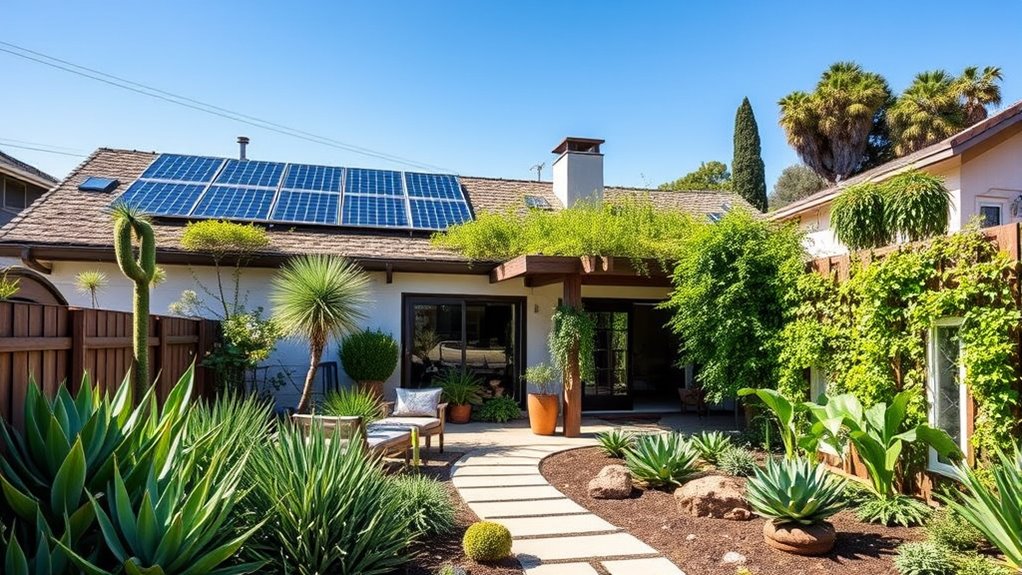
When it comes to innovative designs for urban living, the Backyard Homes Project stands out by transforming how we think about accessory dwelling units (ADUs). This initiative addresses the affordable housing crisis by introducing ADUs that reflect local architectural styles and support sustainable living.
You can find these housing innovations on single-family lots throughout Los Angeles, where they promote community development and livability. With prototype designs ranging from studios to two-bedroom layouts, these units offer adaptability to meet different needs. Additionally, the project emphasizes eco-friendly construction methods to ensure a minimal environmental impact.
Construction costs start at $100,000 for garage conversions, making them an affordable choice. Importantly, the project encourages renting to Section 8 voucher holders for five years, ensuring stable income for homeowners while contributing to housing stability and sustainable community practices.
Environmental Benefits of Sustainable ADUs
While exploring the environmental benefits of Sustainable Backyard Homes, you’ll discover how these ADUs greatly cut down on waste in single-family zones by making efficient use of existing land.
By incorporating sustainable practices, these Accessory Dwelling Units considerably lessen their environmental impact. Designed with environmentally sensitive architecture, they conserve renewable resources like land and energy.
Research shows that Backyard Homes built sustainably have an environmental impact ten times lower than standard homes. Increasing housing density in existing neighborhoods reduces commuting distances, which in turn lowers transportation emissions and promotes urban sustainability.
These Sustainable Backyard Homes also help minimize your carbon footprint, letting you adapt your living space to changing needs while supporting a greener lifestyle in your community. Additionally, the implementation of energy-efficient features can further enhance the sustainability of these homes.
Community Impact and Affordable Housing Solutions
Sustainable Backyard Homes offer not only environmental advantages but also significant community benefits, particularly in addressing affordable housing needs.
In Los Angeles, the Backyard Homes Project transforms single-family lots into valuable spaces by adding Accessory Dwelling Units (ADUs). These units provide stability for housing-insecure tenants and generate rental income for homeowners.
- Affordable Housing: Homeowners rent ADUs to Section 8 voucher holders for at least five years.
- Community Engagement: The program supports you with financing, design, and permitting assistance.
- Homeowner Education: Free landlord education helps you manage properties effectively.
- Sustainable Housing: By 2050, the initiative aims to create 100,000 affordable units.
This approach not only enhances livability but also reduces financial pressures, making neighborhoods more stable.
Partnerships and Collaborations in ADU Development
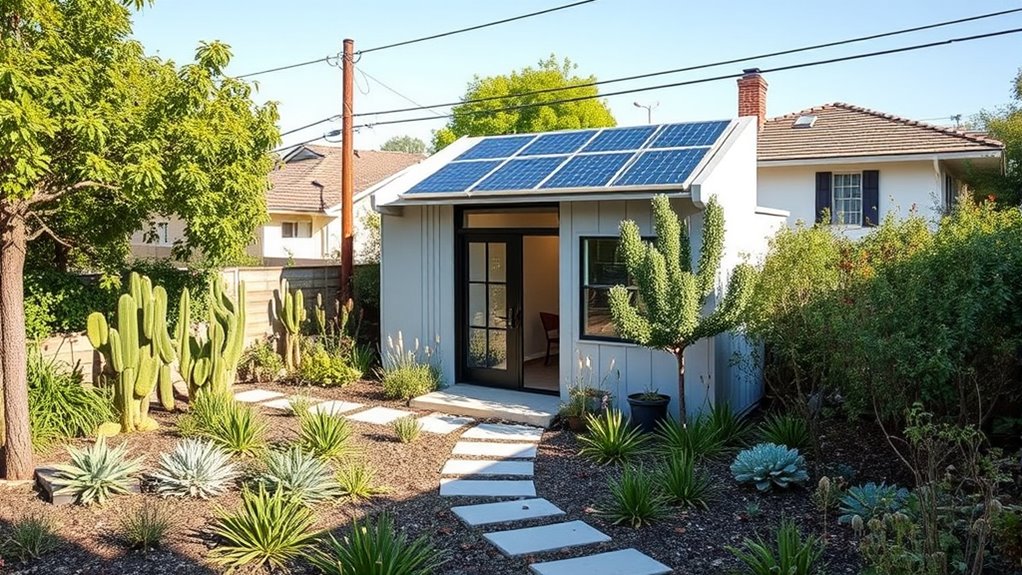
To maximize the potential of ADU development, the Backyard Homes Project relies on strategic partnerships and collaborations.
Working with organizations like Genesis LA Economic Growth Corporation, JP Morgan Chase & Co., and Self-Help Federal Credit Union, they enhance resources for homeowners, supporting affordable housing in Los Angeles.
LA Más spearheads the initiative, offering technical assistance and support, while local non-profit housing groups like Restore Neighborhoods LA and LA Family Housing bolster community networks.
Engaging about 100 UCLA students, the project fosters innovative design and hands-on learning in ADU development.
Collaborating with city planning and housing departments guarantees that ADUs integrate smoothly into existing residential areas, meeting regulations and contributing to sustainable housing solutions in Los Angeles.
Future Prospects for Los Angeles Housing
As Los Angeles looks to the future of housing, the Backyard Homes Project stands poised to transform the cityscape by converting single-family lots into thriving, sustainable communities.
By 2050, the aim is for 20% of these lots to feature Backyard Homes, creating 100,000 affordable housing units. The construction of Accessory Dwelling Units (ADUs) is supported by state legislation, making it easier for homeowners to add these units.
This initiative not only addresses the housing crisis but also supports Section 8 voucher holders, enhancing community-led initiatives in the City of Los Angeles.
- ADU prototypes reflect local architectural styles, streamlining construction.
- Costs for conversions are reduced to around $100,000.
- Homeowners are encouraged to rent to low-income tenants.
- Diverse building types foster neighborhood redevelopment and urban design.
Conclusion
In the ever-evolving landscape of Los Angeles, sustainable backyard homes are reshaping urban living, offering a refreshing change to the housing crisis. You’ll find these ADUs not only reduce environmental footprints but also foster community ties and provide affordable housing solutions. Through strategic partnerships, these innovative spaces are turning dreams into reality. Like seeds planted in fertile ground, they promise a future where sustainability and practicality coexist, paving the way for a brighter, more inclusive city.