
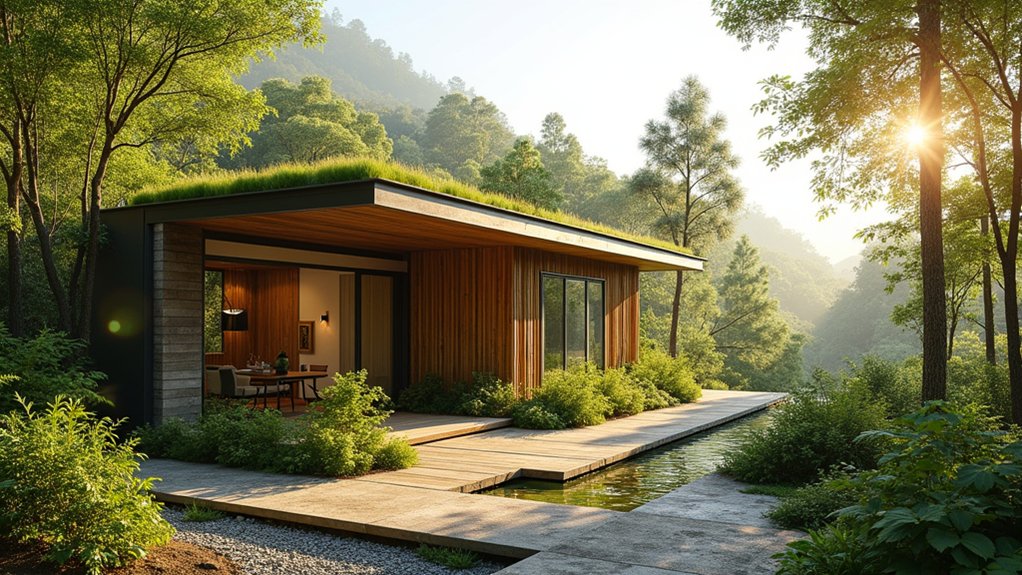
Transform your ADU design with eco-friendly materials like bamboo, recycled steel, and hempcrete for sustainability. Opt for straw bales and rammed earth to boost natural insulation, while mycelium offers futuristic building potential. Cork’s versatility, mass timber’s durability and the unique charm of salvaged materials enhance your space both aesthetically and environmentally. These materials combine practicality with conscientious design, ensuring a reduced carbon footprint. Discover more ways to elevate your ADU with these innovative choices.
Bamboo: A Renewable Resource

Bamboo stands out as a remarkable renewable resource for sustainable construction, ready to transform your ADU design with its unique qualities.
As a fast-growing plant, bamboo matures in just three to five years, making it an excellent sustainable choice for construction materials. It’s not only quick to grow but absorbs more carbon dioxide than many traditional trees, contributing to climate change mitigation.
With a tensile strength that rivals steel, bamboo guarantees durable structures, suitable for various applications like framing and flooring. Its natural aesthetic, coupled with an eco-friendly appeal, enhances both modern and traditional designs.
Plus, bamboo cultivation requires less water and pesticides than conventional timber, amplifying its environmental benefits and making it a smart choice for your construction needs. Additionally, incorporating bamboo into your ADU can align with eco-friendly construction methods that prioritize sustainability and environmental responsibility.
Recycled Steel: Infinite Recyclability
You’ll find that recycled steel is an outstanding choice for eco-friendly ADU design, as it requires up to 75% less energy to produce compared to new steel, greatly cutting carbon emissions.
Its structural longevity guarantees that your building remains durable and resistant to severe weather, which means fewer replacements over time.
Energy-Efficient Production
When it comes to energy-efficient production, recycled steel stands out as a remarkably sustainable option for construction. It uses up to 75% less energy than producing new steel from raw materials, making it an excellent sustainable choice.
This energy efficiency considerably reduces carbon emissions, lessening the environmental impact. By recycling about 70 million tons of steel annually in the U.S., you’re actively participating in resource conservation and waste reduction.
Recycled steel supports a circular economy, diverting scrap metal from landfills and minimizing reliance on virgin resources. Its durability guarantees strong, long-lasting structures, reducing the need for frequent repairs and replacements.
This approach not only conserves resources but also embodies a commitment to sustainable construction practices.
Structural Longevity Benefits
While considering materials for sustainable construction, recycled steel offers significant structural longevity benefits due to its infinite recyclability. As a sustainable choice, recycled steel maintains structural integrity and durability, allowing it to be reused multiple times without degrading in strength or quality.
This durability guarantees that structures can withstand harsh conditions, promoting longevity and reducing the need for frequent replacements, thereby supporting sustainability.
Recycled steel also plays an essential role in waste management and resource conservation by diverting millions of tons of steel waste from landfills annually. The energy savings in its production process further enhance its appeal, using up to 75% less energy than new steel production.
Additionally, its flexibility supports innovative design, enabling large open spaces without excessive support beams, making it ideal for modern construction.
Straw Bales: Natural Insulation
Straw bales offer a remarkable solution for those seeking sustainable and efficient insulation for accessory dwelling units (ADUs).
As a renewable and biodegradable material, straw bales are made from agricultural byproducts, promoting sustainable construction. They provide excellent thermal insulation, with R-values ranging from R-13 to R-25, considerably reducing your heating and cooling costs.
Beyond temperature control, straw bales deliver impressive soundproofing qualities, creating a quieter indoor environment. Their density makes them naturally fire-resistant, and when plastered correctly, they enhance building safety.
Energy efficiency is another advantage, as straw bales contribute to healthier indoor air quality by being free of harmful chemicals found in synthetic insulations.
Hempcrete: Sustainable and Strong
Beyond the natural insulation offered by straw bales, hempcrete emerges as another remarkable material in sustainable ADU design.
As a sustainable building material, hempcrete combines hemp fibers, lime, and water to create a product with carbon-negative properties, absorbing more carbon dioxide during growth than it emits. This lightweight material offers excellent thermal insulation, helping you regulate indoor temperatures and reduce energy consumption.
Hempcrete is non-toxic, ensuring healthier indoor air quality by not emitting harmful chemicals. Its use supports agricultural sustainability since hemp grows quickly with fewer pesticides and water.
Additionally, hempcrete is fire-resistant and naturally regulates humidity, making it a resilient choice for diverse climates. By choosing hempcrete, you’re investing in a durable, eco-friendly solution for your ADU. Furthermore, incorporating energy-efficient features can enhance the overall sustainability of your ADU design.
Rammed Earth: Traditional and Eco-Friendly
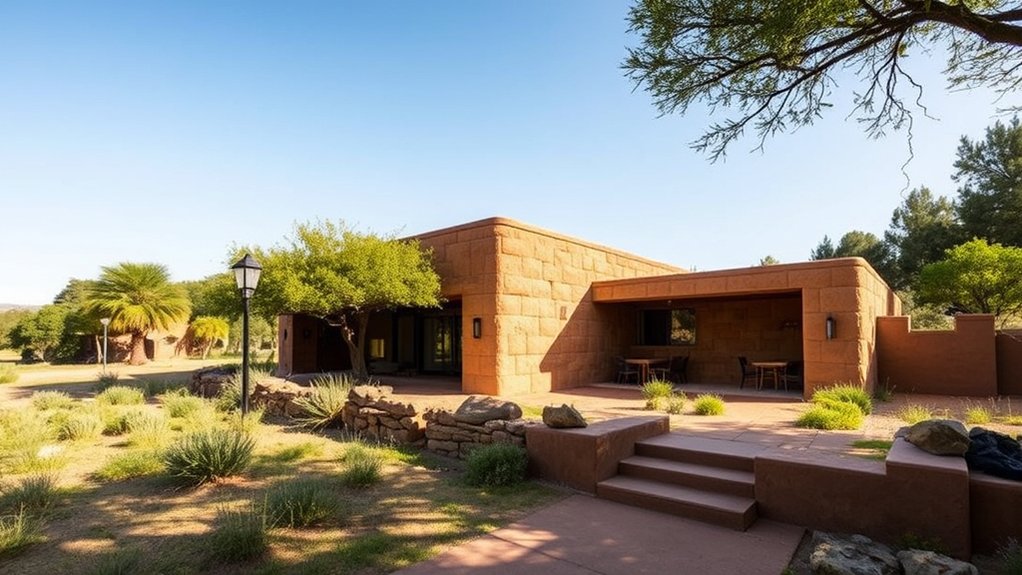
You’ll appreciate how rammed earth construction offers sustainable advantages, using a mix of local sand, gravel, and clay that cuts down on transportation emissions and boosts local economies.
Its thermal performance is impressive too, providing natural insulation to keep your ADU comfortable throughout the year.
Plus, the unique aesthetic and structural appeal of rammed earth, with its natural textures and earthy tones, creates a harmonious and enduring environment that requires minimal maintenance.
Sustainable Construction Advantages
When it comes to sustainable construction, rammed earth emerges as a standout option for designing eco-friendly ADUs. This method leverages natural materials like sand, gravel, and clay, ensuring energy efficiency due to its excellent thermal mass.
Rammed earth construction offers significant sustainable construction advantages, including remarkable durability, as these structures can endure for generations with minimal upkeep. They’re also fire-resistant and pest-resistant, boosting safety and longevity compared to conventional materials.
Using locally sourced materials reduces transportation emissions, thereby supporting a low carbon footprint and benefiting local economies. Additionally, rammed earth walls bring unique aesthetic qualities, with earthy tones and textures that align with eco-conscious design principles.
These features make them visually appealing in sustainable architecture, enhancing the overall allure of your ADU.
Thermal Performance Benefits
Rammed earth, with its traditional roots and eco-friendly advantages, offers exceptional thermal performance that’s hard to beat. It utilizes natural materials like sand, gravel, and clay, creating substantial thermal mass.
This mass stabilizes indoor temperatures, enhancing energy efficiency and often cutting energy costs by up to 30%. As a durable material, rammed earth withstands extreme weather, ensuring long-lasting performance with minimal repairs.
Its natural insulating properties help regulate humidity, contributing to healthier indoor environments by reducing mold and air pollutants. Using locally sourced materials minimizes transportation emissions, aligning with sustainable building practices.
Aesthetic and Structural Appeal
Though often overlooked in favor of more conventional building materials, rammed earth brings a unique aesthetic and structural appeal that sets it apart.
As a sustainable building material, it combines sand, gravel, and clay, creating a strong and durable structure through the use of natural materials. Its unique textures and earthy tones offer a distinctive aesthetic appeal, enhancing any design.
Additionally, rammed earth’s thermal mass notably improves energy efficiency by stabilizing indoor temperatures, reducing heating and cooling costs. Its structural durability guarantees resistance to fire, pests, and weather, providing longevity with minimal maintenance.
By using locally sourced materials, you reduce transportation emissions, minimizing the environmental impact.
Opting for rammed earth not only supports sustainability but also enriches the visual and structural quality of your project.
Structural Insulated Panels (SIPs): Efficiency in Construction
Structural Insulated Panels (SIPs) offer a cutting-edge solution for enhancing efficiency in construction, especially for those enthusiastic to build sustainably.
You can benefit from the energy efficiency and thermal insulation that SIPs provide, as they consist of a foam core sandwiched between two rigid panels. This design reduces energy consumption, cutting energy costs by up to 50% compared to traditional framing.
Prefabricated construction with SIPs allows for quick construction times, reducing on-site waste and minimizing your carbon footprint. Plus, these lightweight materials are easy to transport and install, saving on labor costs.
- Energy-efficient thermal insulation
- Prefabricated for quick construction
- Reduces energy costs considerably
- Lightweight for easy handling
- Minimizes carbon footprint in building
Mycelium: The Future of Building
As the construction industry seeks to innovate with sustainable practices, mycelium stands out as a compelling material for the future. This renewable building material, derived from the root structure of fungi, is grown using agricultural waste and requires minimal resources.
Mycelium’s excellent insulation properties help maintain indoor temperatures, reducing energy consumption in buildings. Beyond that, it’s biodegradable, decomposing naturally without leaving toxic waste, which enhances environmental sustainability.
Despite being lightweight, mycelium is durable, suitable for various construction applications like wall panels and furniture. Its rapid growth and low energy requirements make it ideal for eco-friendly construction.
Embracing mycelium not only supports sustainable building but also offers a practical, forward-thinking solution in the quest for greener practices.
Cork: Versatile and Renewable

You’re probably looking for materials that not only support sustainability but also enhance the functionality of your ADU.
Cork stands out with its sustainable harvesting practices; it’s taken from cork oak trees without harming them, allowing for repeated harvests every 9 to 12 years.
Additionally, cork’s impressive thermal and acoustic insulation properties help maintain comfortable indoor temperatures and reduce noise, making it an excellent choice for eco-friendly and energy-efficient designs.
Sustainable Harvesting Practices
While cork may seem like an ordinary material, its sustainable harvesting practices make it an extraordinary choice for eco-friendly building solutions.
Harvesting cork involves carefully removing the bark from cork oak trees without harming them, allowing the trees to regenerate and continue growing. This practice not only guarantees a renewable resource but also supports biodiversity by maintaining healthy ecosystems in Mediterranean regions.
Local economies benefit from this labor-intensive process, which relies on skilled workers and traditional craftsmanship.
Cork’s versatility extends to flooring and decorative elements, enhancing energy efficiency in your designs. Plus, it’s biodegradable and recyclable, making it environmentally friendly.
- Cork oak trees live over 200 years.
- Harvesting occurs every 9-12 years.
- Supports wildlife habitats.
- Boosts local economies.
- Biodegradable and recyclable.
Thermal and Acoustic Insulation
Incorporating cork into your ADU design offers impressive benefits, especially regarding thermal and acoustic insulation. Known for its excellent thermal insulation, cork helps maintain stable indoor temperatures, potentially cutting energy consumption for heating and cooling by up to 30%.
Its unique acoustic properties effectively dampen sound transmission, providing a quieter environment—ideal for multipurpose ADUs. Cork’s natural moisture resistance also means it won’t fall victim to mold and pests, enhancing indoor air quality.
As a sustainable choice, cork is harvested from the bark of cork oak trees without harming them, allowing continuous regeneration. Plus, it’s biodegradable and recyclable, reducing waste.
Opting for cork not only benefits your living space but also supports a healthier planet.
Salvaged Materials: Unique and Resourceful
Embracing salvaged materials in your ADU design isn’t just a nod to sustainability; it’s a strategic decision that embodies both environmental responsibility and economic savvy.
Salvaged materials, like reclaimed wood, offer a unique aesthetic character, often imbued with historical significance, while supporting energy conservation. By choosing these materials, you achieve cost savings and adhere to sustainable practices that align with green building standards.
This approach also bolsters local economies by supporting businesses focused on deconstruction and resale.
Consider these benefits:
- Reclaimed wood provides warmth and character.
- Bricks and metal add durability with a story.
- Cost savings keep projects budget-friendly.
- Energy conservation through material reuse.
- LEED certification points enhance sustainability credentials.
Incorporating salvaged materials creates a distinctive, eco-conscious living space.
Mass Timber: Efficient and Durable
When you’re considering sustainable building options for your ADU, mass timber emerges as a standout choice due to its impressive environmental and structural benefits.
This sustainable building material helps reduce greenhouse gas emissions by capturing and storing carbon dioxide, making it an eco-friendly choice compared to steel and concrete. The production process uses up to 75% less energy than steel, further lowering the environmental impact.
With its impressive strength and durability, mass timber structures often outlast conventional materials, minimizing replacements and maintenance. Sourced from sustainably managed forests, it supports responsible forestry practices.
Beyond its functionality, mass timber offers aesthetic appeal with its natural wood grain, creating inviting living spaces. It’s a versatile and responsible choice for your ADU design.
Conclusion
In the quest for sustainable ADU design, you’ve got quite the eclectic toolbox. Who knew your next building project could involve mushrooms and straw bales? By embracing eco-friendly materials like bamboo and mycelium, you’re not just saving the planet; you’re setting trends in green living. So, go ahead, build that ADU with the confidence that you’re making choices as renewable as your Netflix subscription. Just remember, every eco-friendly decision is one small step for Earth, one giant leap for design.