

To design an eco-friendly tiny home in LA, start with energy-efficient appliances and LED lighting to minimize energy use. Opt for high-insulation windows and sustainable materials like reclaimed wood and recycled steel for durability and a lower environmental footprint. Enhance comfort with eco-friendly insulations, such as cellulose or sheep’s wool, and install a rainwater harvesting system along with low-flow fixtures to conserve water. Explore creative upcycling approaches for unique design touches while maximizing resources and space. Investigate these strategies for a sustainable build.
Maximizing Energy Efficiency in Tiny Homes
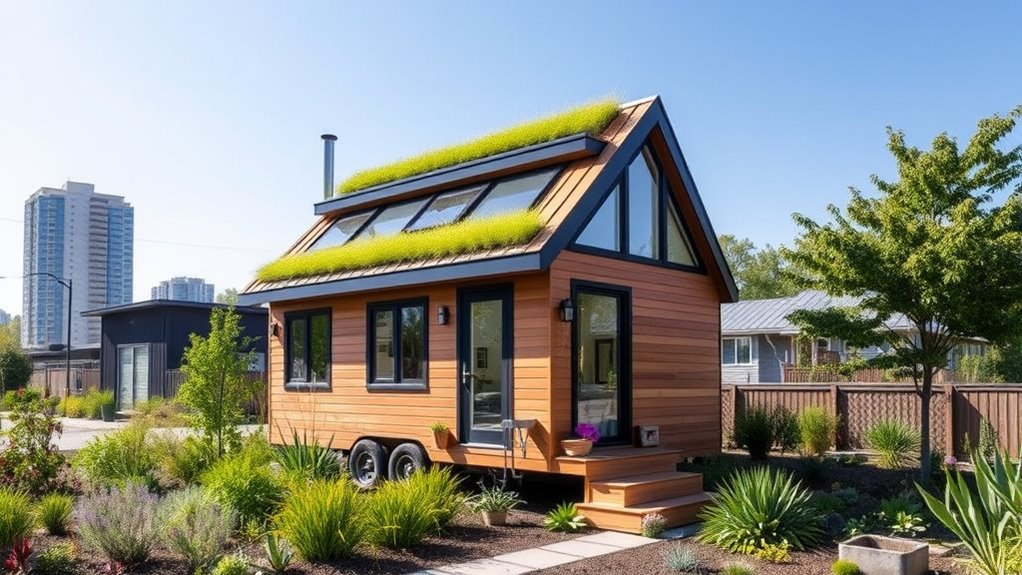
When you’re looking to maximize energy efficiency in your tiny home, start by focusing on the essentials that have the biggest impact.
Opt for energy-efficient appliances and LED lighting to dramatically cut down on energy consumption. This choice not only supports eco-friendly practices but also slashes your utility bills.
Installing high-insulation windows and eco-friendly insulation materials minimizes heat loss, keeping your home cozy year-round.
Implement passive solar design by strategically placing windows to harness natural light, reducing your need for artificial heating and cooling.
These thoughtful design choices can considerably lower your total energy use, leading to long-term cost savings and a reduced carbon footprint. Additionally, consider eco-friendly construction methods that enhance both sustainability and durability in your tiny home design.
Choosing Sustainable Building Materials
Embracing sustainable building materials in your tiny home design not only supports environmental responsibility but also enhances the overall quality and character of your living space.
Opt for reclaimed wood to reduce deforestation’s impact while adding unique charm to your home. Incorporate recycled steel to boost durability and lower the environmental footprint of traditional steel production.
Choose low or zero VOC materials for paints and finishes, improving indoor air quality and creating a healthier environment. Use eco-friendly insulation like cellulose or sheep’s wool to maintain comfortable temperatures and enhance energy efficiency.
Select sustainable materials such as bamboo or cork flooring—renewable resources that offer both aesthetic appeal and durability.
Creative Upcycling and Repurposing Ideas
Although the concept of upcycling might sound trendy, it offers practical solutions for designing a tiny home that exudes both charm and sustainability.
By salvaging used materials, you can create bespoke furniture pieces that add unique character to your space. Here are some creative upcycling ideas to contemplate for your tiny house:
- Reclaimed Wood: Use reclaimed wood from old barns to craft personalized furniture that tells a story and promotes sustainability.
- Vintage Doors and Windows: Transform these into decorative features or functional art, enhancing your home’s aesthetic appeal while reducing waste.
- Pallets: Turn pallets into outdoor furniture or storage solutions, saving money and showcasing your creativity in design. Additionally, consider incorporating elements from ADU construction and design to maximize the space efficiency of your tiny home.
Effective Insulation Techniques for Comfort
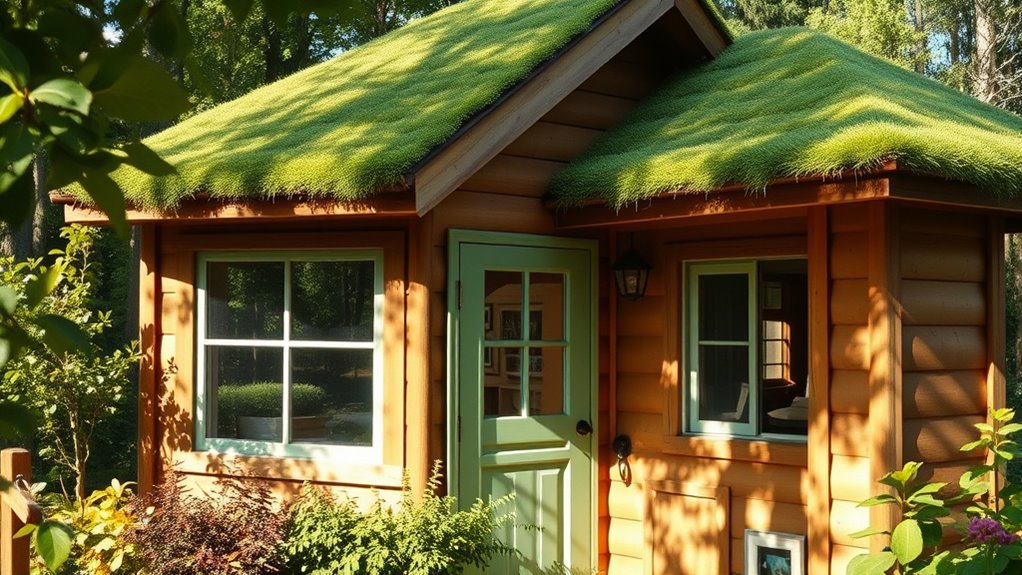
Crafting a sustainable tiny home in Los Angeles involves more than just creative upcycling; it also requires smart insulation strategies to guarantee comfort throughout the year.
Start by investing in eco-friendly insulation materials like cellulose or sheep’s wool. These options enhance energy efficiency and minimize environmental impact while keeping you cozy.
Spray foam insulation is another powerful choice, as it expands to fill gaps, effectively regulating temperature and preventing air leaks.
For ideal comfort, assure high-quality insulation in your walls, ceilings, and floors, aiming for high R-values like R-30 for roofs and R-13 for walls. This notably boosts energy efficiency, essential in LA’s varied climate.
Pair these efforts with energy-efficient windows featuring low U-values to further reduce heat loss.
Water Conservation Strategies for Tiny Living
In Los Angeles, where water scarcity is a pressing concern, integrating water conservation strategies into your tiny home design is vital for sustainability and cost savings.
To make a notable impact, consider these strategies:
- Rainwater Harvesting: Install a system to collect rainwater for irrigation and non-potable uses, helping to reduce reliance on municipal water sources in LA’s arid climate.
- Low-Flow Fixtures: Opt for low-flow toilets and faucets, which can save up to 13,000 gallons of water per year per household, considerably cutting down on water consumption.
- Greywater Recycling: Implement a greywater recycling system to reuse water from sinks and showers for irrigation, potentially saving thousands of gallons annually.
Incorporating these methods will guarantee your tiny home remains eco-friendly and efficient.
Conclusion
In your journey to create an eco-friendly tiny home in LA, think of it as crafting your own green oasis, much like Thoreau’s retreat at Walden Pond. By maximizing energy efficiency, choosing sustainable materials, and embracing creative upcycling, you’ll not only reduce your footprint but also enhance your quality of life. Effective insulation and water conservation will make your tiny home a comfortable haven. So, step forward with these strategies, and your tiny home will be both a refuge and a demonstration to sustainable living.